
Why Choose the NS36IR Drifter Rock Drill?
The global extraction industry relies on durable rock excavation machinery. Mining operations are going deeper underground. They face extreme stresses and logistical constraints. You need equipment that maximises mechanical availability. You also must minimise non-productive time. The NS36IR Drifter Rock Drill delivers this performance. It serves as a primary tool for blast hole creation.
Advanced Technology in the NS36IR Drifter Rock Drill
Access to electrical infrastructure is limited in the mining and civil engineering field, particularly around remote sites and locations. The Pneumatic drifters are vital in this instance. NASA Engineering SA manufactures these drills in South Africa.
The NS36IR Drifter Rock Drill is highly advanced. The design separates percussive impact and rotation. Operators gain infinite control over rotation speed. The percussive system features a 114 mm diameter bore. It consumes 14 cubic metres per minute of air. The motor generates 318 Nm of torque. The system drives drill rod strings deep without stalling.
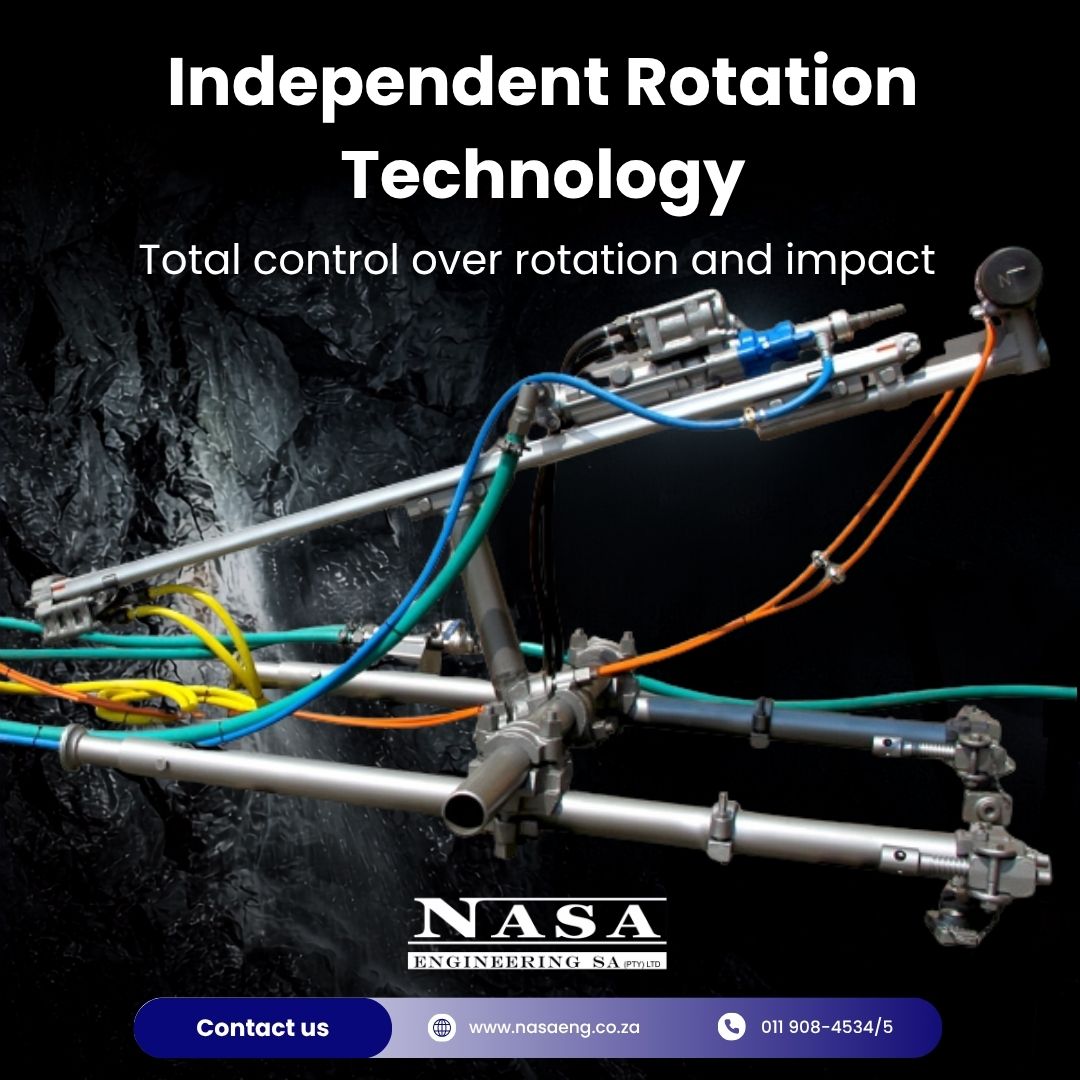
Underground Applications for the NS36IR Drifter Rock Drill
Underground mining presents severe spatial and geological constraints. Deep rock masses experience immense pressure. The NS36IR Drifter Rock Drill works exceptionally well here. It offers a high power-to-weight ratio and precise control.
Development tunnelling requires rapid face drilling. You can easily mount this drill on various drill rigs. It provides rapid penetration rates in hard rock. In addition, contour holes must be highly accurate. The independent rotation stops the bit from wandering. As a result, this creates a smooth and safe tunnel profile.

Surface Applications for the NS36IR Drifter Rock Drill
Surface excavation requires equipment built for continuous production. The NS36IR Drifter Rock Drill acts as a primary rock-breaking engine. You can mount it on track drill pneumatic motors.
Quarry benching needs a precise grid of blast holes. This machine drills perfect holes rapidly. Hole straightness is critical for site safety. Precise control prevents dangerous blowouts during blasting.
Mounting the NS36IR Drifter Rock Drill
A high-performance rock drill requires a strong feed system. The NS36IR Drifter Rock Drill features a modular mounting architecture. It fits screw feed and chain feed systems seamlessly.
Screw feeds provide smooth and rigid thrust. They are perfect for confined underground operations. Conversely, chain feeds accommodate much longer drill steels. This makes them ideal for deep long-hole drilling. Check our internal feed systems page for more details.
Wet and Dry Flushing with the NS36IR Drifter Rock Drill
Clearing rock cuttings is critical for drilling efficiency. If you do not clear chips, the bit wastes energy. The NS36IR Drifter Rock Drill handles wet and dry flushing.
Wet drilling uses pressurised water to clear cuttings. It also suppresses hazardous respirable silica dust. Dry drilling uses compressed air to eject cuttings. This is essential in water-sensitive geological formations. Learn more about our dust suppression solutions.

Maintenance for the NS36IR Drifter Rock Drill
Profitability depends on the mechanical availability of your equipment. Unscheduled downtime ruins production schedules. The NS36IR Drifter Rock Drill uses high-precision CNC manufacturing. NASA Engineering SA suggests preventative maintenance for the best results. Technicians must check the inline lubricator daily. You must also replace worn front chuck bushings promptly. Read our maintenance guide for full instructions.

Contact Us Today
The NS36IR Drifter Rock Drill is a superior rock-breaking tool. It delivers immense power and precise operational control and it maximises your return on capital investment. Are you ready to optimise your mining operations? Contact our expert team today to request a quote. Let us help you secure the best drilling equipment. Call us now to discuss your specific site requirements. CONTACT US
Looking for an Engineering solution or products from our range?