
Mastering Precision and Safety in NS36IR Deep Hole Drilling
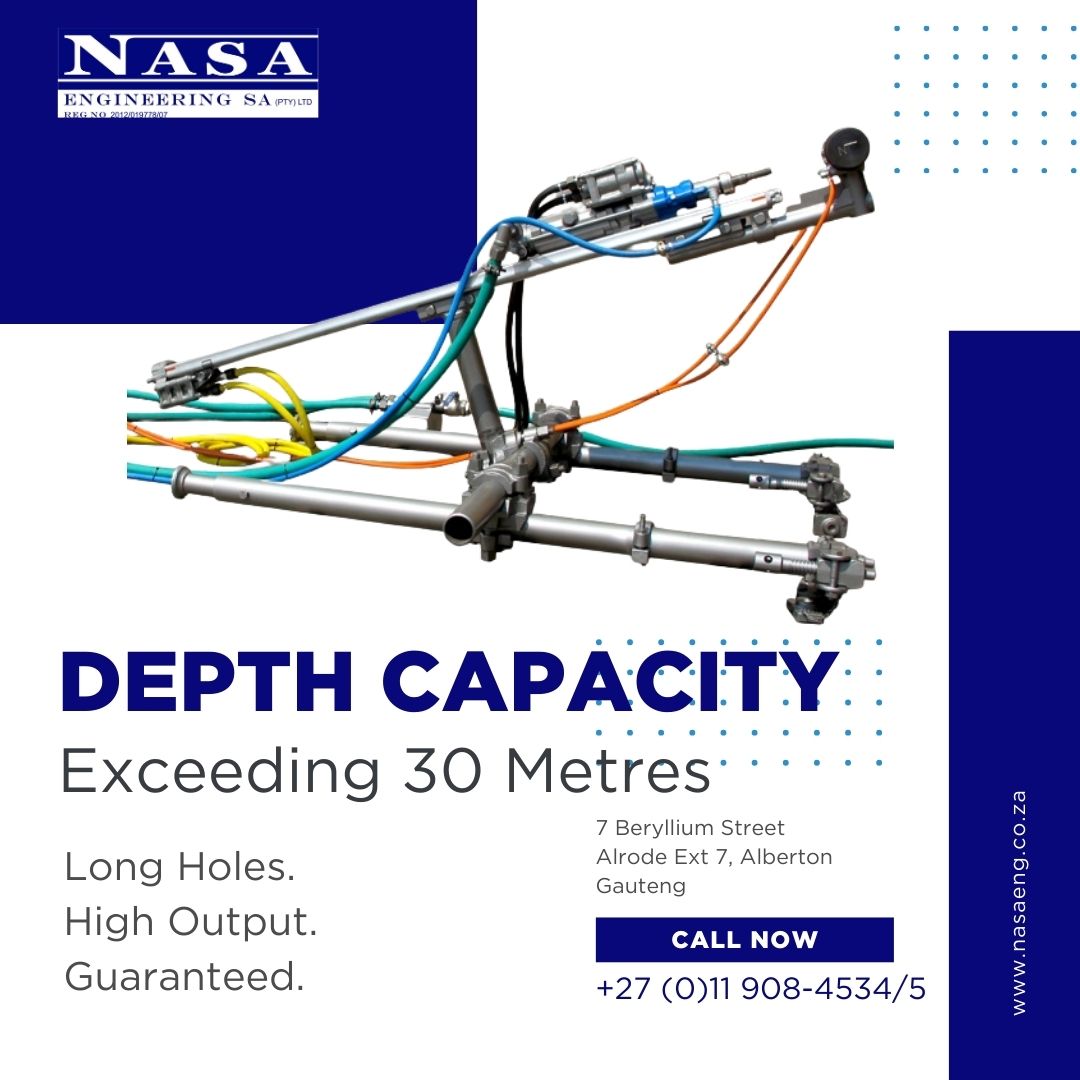
The NS36IR Drifter Rock Drill, manufactured by NASA Engineering SA, is the heavy-duty pneumatic solution engineered specifically for demanding deep hole applications across the Southern African Development Community (SADC). Capable of drilling holes from 38 mm up to 75 mm in diameter, the machine is designed to maintain efficiency and stability at depths exceeding well over 30 metres.
For engineers, mine managers, and operators, proficiency in the precise operational parameters of the NS36IR Deep Hole Drilling process is directly correlated with reduced Total Drilling Cost per meter (TDC/meter) and increased asset longevity. As a remote-controlled machine, the five operational controls, Hammer, Flushing, Feed, Rotating Direction and Speed, and Collateral Servicing must be used systematically to ensure optimal performance from the 114 mm bore and 318 Nm rotation motor.

The Non-Negotiable Collaring Sequence
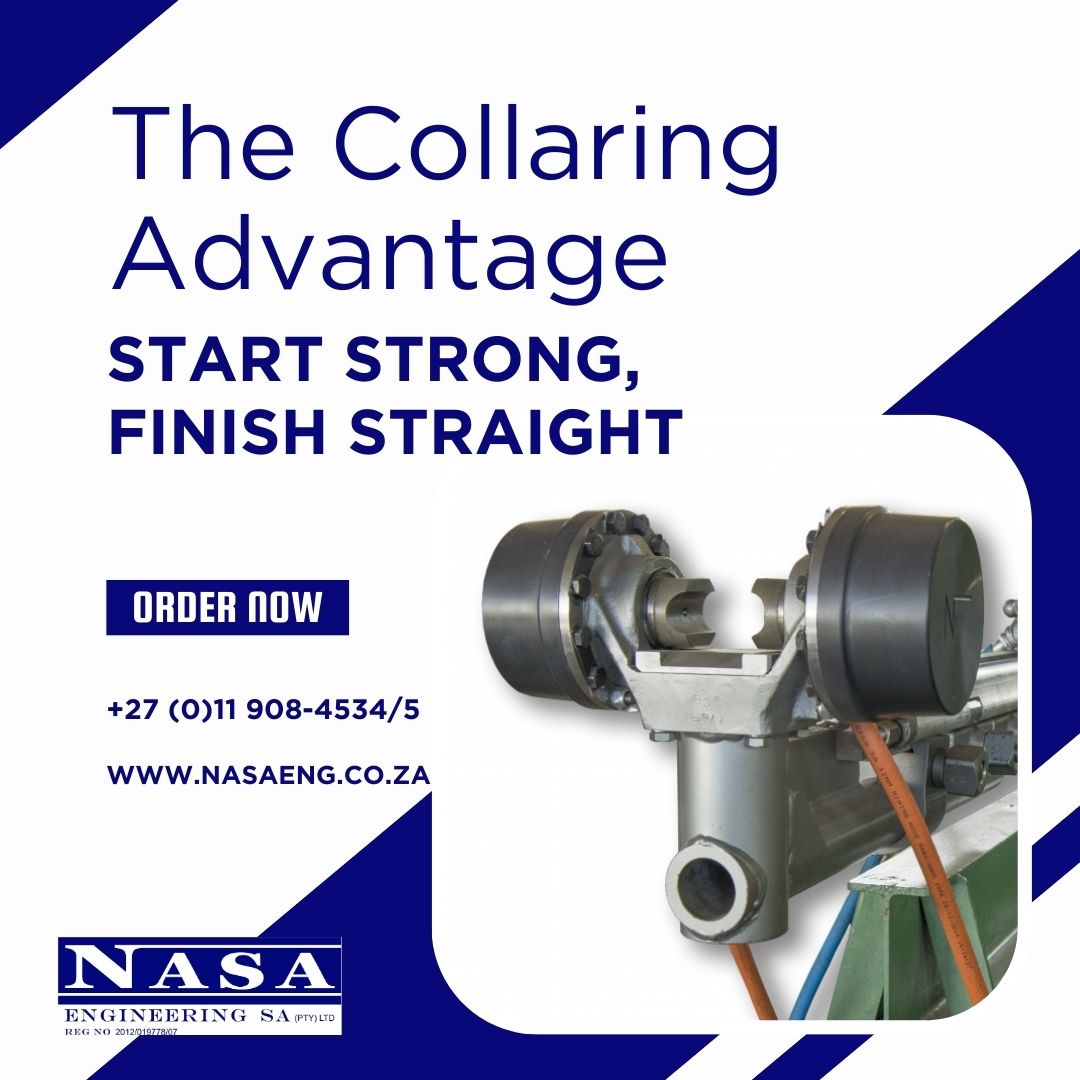
Before any deep drilling commences, the proper collaring sequence must be executed to establish a straight and stable initial hole entry. The operator first uses the feed control to position the drill bit approximately 10 mm from the rock surface. Next, they partially open the flushing control valve and gently engage the hammer control valve to about half power. Rotation is started at a low speed, roughly 50 RPM, turning anticlockwise when viewed from the rear. The drill is advanced slowly until the bit begins striking the rock. This condition is held until the drill string is oscillating backward and forward approximately 10 mm, establishing a clean, stable ‘collar’ or initial opening for the hole.
Oscillation Control: The Heart of NS36IR Deep Hole Drilling Efficiency
Once the collar is established, the objective shifts to maximum penetration while strictly controlling the drill string’s dynamic movement. The flushing and hammer controls are opened fully, and the feed control is advanced until the drill string oscillation is reduced and tightly maintained within the range of 2 mm to 4 mm.
This narrow oscillation window is crucial for both asset protection and hole quality. Underfeeding, which allows oscillation greater than 4 mm, permits the drill to cycle inefficiently, causing excessive shock loading and potential internal damage. Conversely, overfeeding, which results in no oscillation, generates excessive thrust forces that can potentially shift the mounting rig, leading to hole misalignment and reduced drilling rate. Mastering the 2 mm to 4 mm range ensures the kinetic energy transmission is maximised, directly enhancing fragmentation and overall efficiency.
Applications and String Management
The NS36IR is integral to various high-value SADC projects. In surface operations, it is mounted on chain feeds for precise quarry bench drilling and civil contracting, such as drilling deep anchoring holes. Underground, it is mounted on screw and chain feed cradles for development tunnelling, fan and ring drilled blast holes, and critical long-hole applications for drainage and communication lines.
When adding or removing threaded drill rods during NS36IR Deep Hole Drilling, absolute safety protocol must be followed. The drill string must be lifted 20 mm from the bottom of the hole. Operating the hammer at half power loosens the joints, and reverse rotation should be selected only briefly to unscrew the rods. Crucially, the centraliser must support the drill steel or coupling before any section is removed. Failure to support the string when working on upholes risks severe injury, while failure on downholes risks losing the drill string entirely.

For details on the compatible feeds and rigs suitable for the NS36IR, please visit our Products and Solutions page: NS36IR Drifterpowerful 114 mm diameter bore drifter type rockdrill – NASA Engineering South Africa.
We stand by the quality of our OEM equipment, built right here in South Africa. To secure genuine components and expert training for your operators, contact our technical team via our Contact Us page: Contact Us – HQ – NASA Engineering South Africa. Further information on our local manufacturing capabilities can be found on our About Us page: About – NASA Engineering South Africa.
Looking for an Engineering solution or products from our range?