

The Critical Role of the NS36IR Chuck Bushing in Asset Protection
For mine operators and engineers managing expensive drilling assets across the SADC region, understanding where to focus preventative maintenance efforts is paramount to cost control. The NS36IR Drifter Rock Drill is designed with an internal lubrication system that pays particular attention to the heavily loaded front-end components.
Among these, the NS36IR Chuck Bushing is the critical sacrificial component designed to protect the most valuable, high-precision assets: the piston and the drill shank.
Ignoring the condition of this relatively low-cost component can lead to rapid and catastrophic failure of the piston and cylinder, resulting in significant and avoidable repair costs that severely compromise the Total Drilling Cost per meter (TDC/meter).
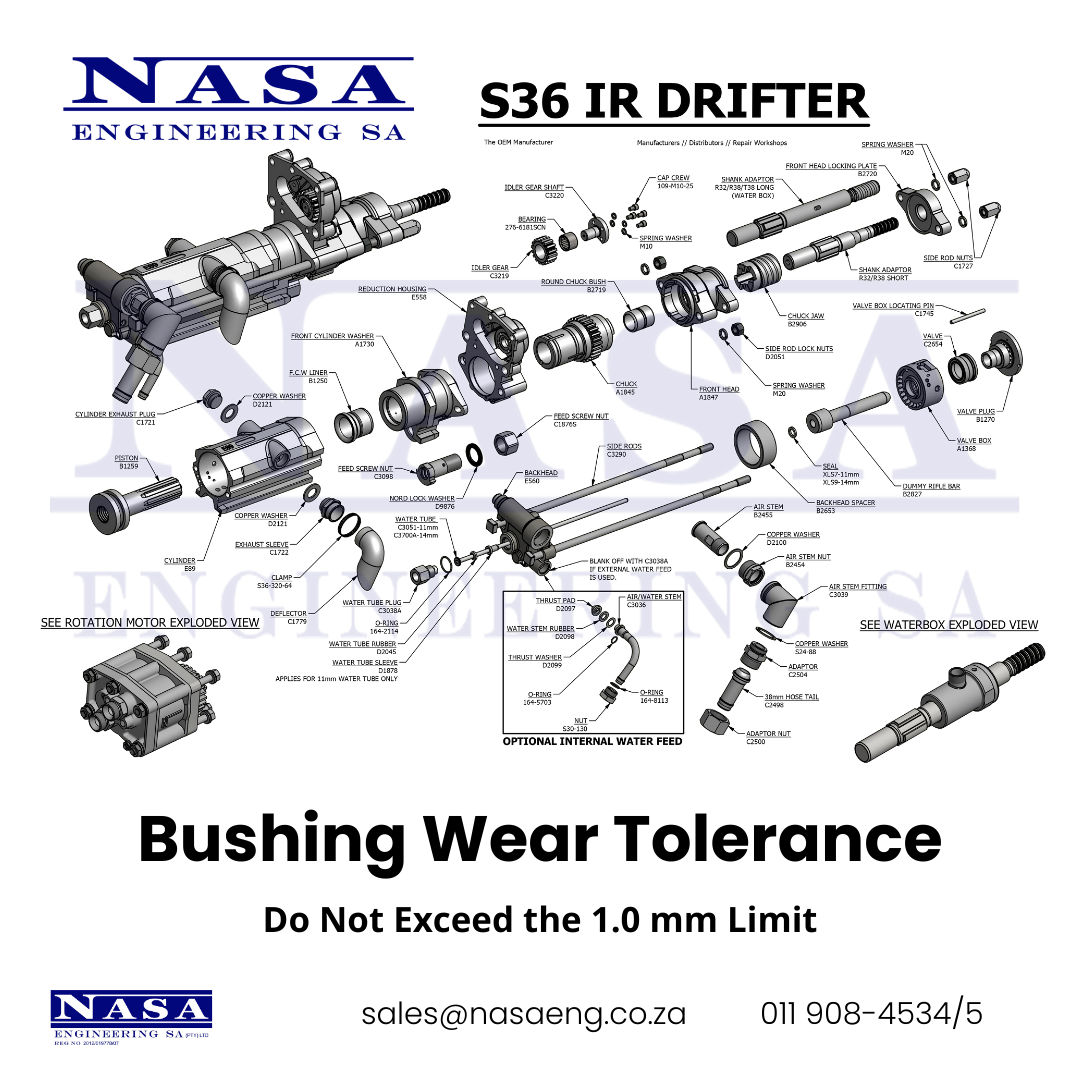
Discard Limits and Component Integrity
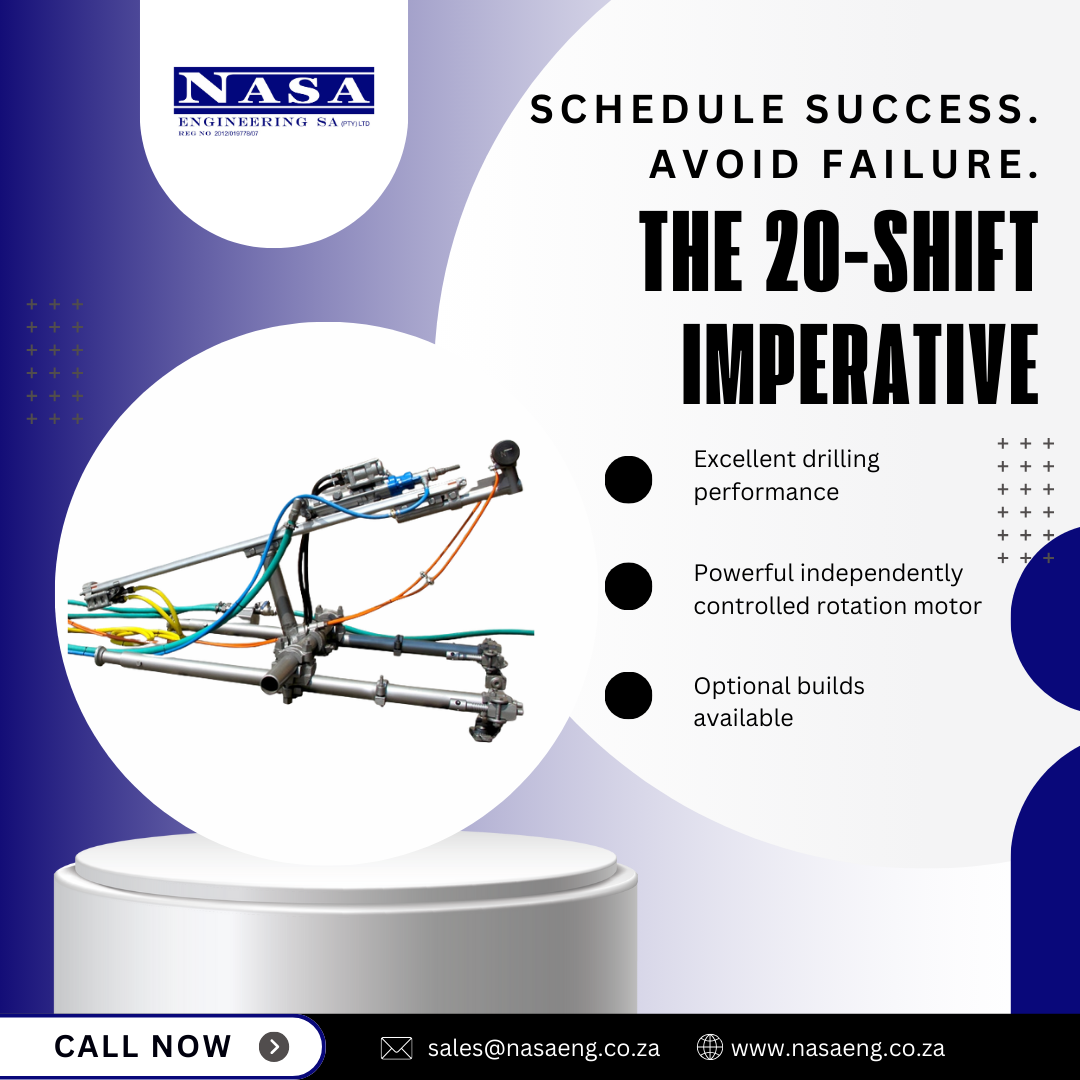
Periodic examination and stripping of rock drills are essential for optimum component life. We recommend that rock drills in regular use are serviced on a call up basis every 20 shifts or one month, whichever is shorter. This scheduled inspection is the time to check the wear against defined tolerances.
The chuck and bushing inspection is a priority:
Chuck Jaw must be discarded when worn.
Chuck Bushing must be discarded when it has worn by 1.0 mm oversize on the diameter.
Exceeding the 1.0 mm oversize limit for the NS36IR Chuck Bushing creates increased friction, misalignment, and vibration transmission directly to the piston and shank. This rapid wear mechanism necessitates the replacement of major, high-cost components, vastly outweighing the expense of a new bushing. By managing the wear proactively, engineers maintain the intended clearance between the chuck and the front cover, which should not exceed 1.0 mm.
Workshop Procedure: Precision Installation
Proper workshop procedure is as vital as the maintenance schedule itself. When replacing the NS36IR Chuck Bushing, adherence to the OEM assembly guide is non-negotiable.
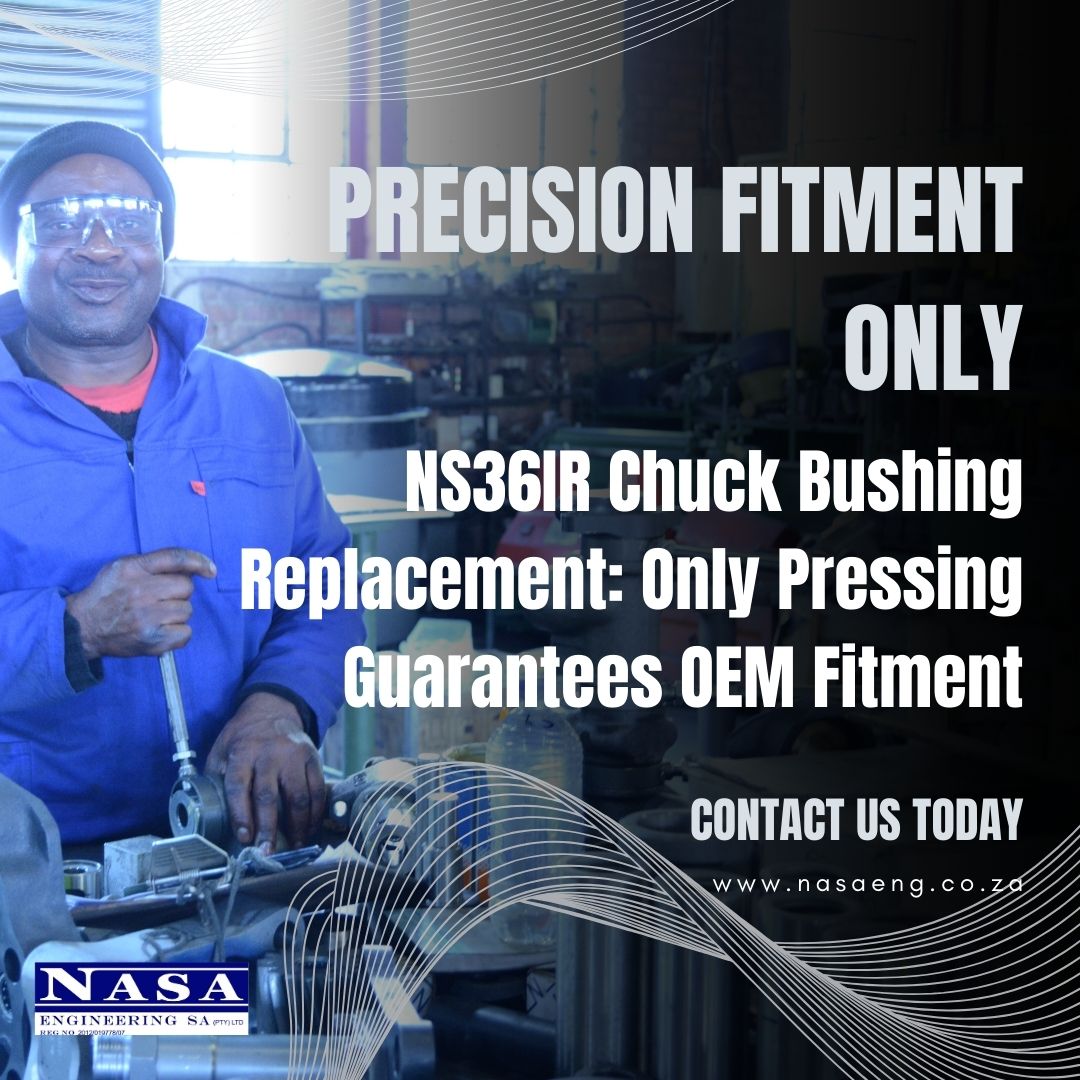
The bushing should be pressed out of the chuck from the rearward side. New bushings must then be pressed into place from the front of the chuck. It is critical to note that components that should be pressed together, such as the bushing, must never be driven with a hammer. Hammering introduces unintended stress damage and misalignment, compromising the component’s integrity and shortening its functional lifespan before the drill even returns to operation.
The entire reassembly process demands careful lubrication. All components should be washed in solvent, dried thoroughly, and lubricated with rock drill oil as they are assembled. The workshop must ensure that a good quality oil or grease is used throughout the process to guarantee the continuous, positive lubrication required for all internal moving parts. This lubrication is the primary defence against frictional failure in heavy-duty SADC applications.
For workshop teams seeking detailed instructional diagrams, we encourage you to download the supplementary charts available on our website.
Partnering with NASA Engineering SA ensures access to genuine NS36IR components that possess the exact metallurgical and dimensional precision required. For genuine spares, visit our Spares and Components section: MINING Archives – NASA Engineering South Africa. You can also speak to us about our specialised repair workshops that maintain strict OEM standards Contact Us – HQ – NASA Engineering South Africa.
Looking for an Engineering solution or products from our range?