
Airleg Spares South Africa | Parts and Maintenance
When a hand-held rock drill fails to make progress, the airleg is frequently the cause. An airleg that sags or creeps reduces penetration rates. Consequently, the operator tires more quickly and the shift loses valuable metres.
Fortunately, most airleg failures are predictable. By keeping the correct airleg spares in stock, crews can rectify faults promptly. In addition, a brief inspection at the start of every shift allows problems to be identified at an early stage.
This guide outlines which components are subject to wear, what should be inspected underground and why parts are essential to uptime and safety.
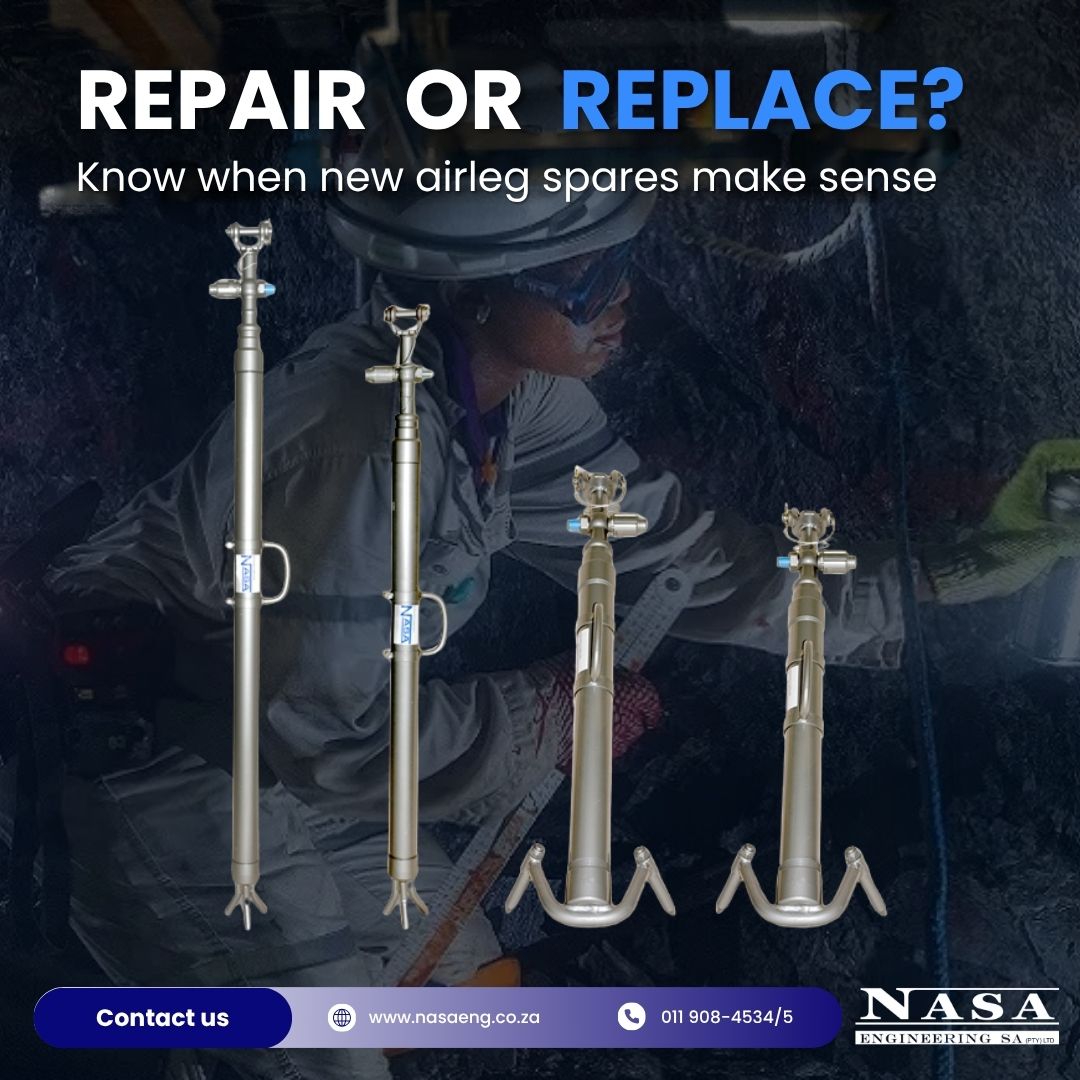
The Function of Airleg Spares: How an Airleg Operates
An airleg is a telescopic pneumatic cylinder, also referred to as a pusher leg, thrust leg or jackleg. It supports the rock drill and advances it into the rock.
Compressed air drives a piston and piston rod out of the airleg cylinder, while the operator controls the feed by means of a twist grip. As the airleg operates close to the face, its seals and threads are continually exposed to mud, water and grit.
South African operator training addresses these fundamentals. For example, SAQA Unit Standard 244415 requires learners to explain the operation of the drill, airleg, lubricator and hoses.
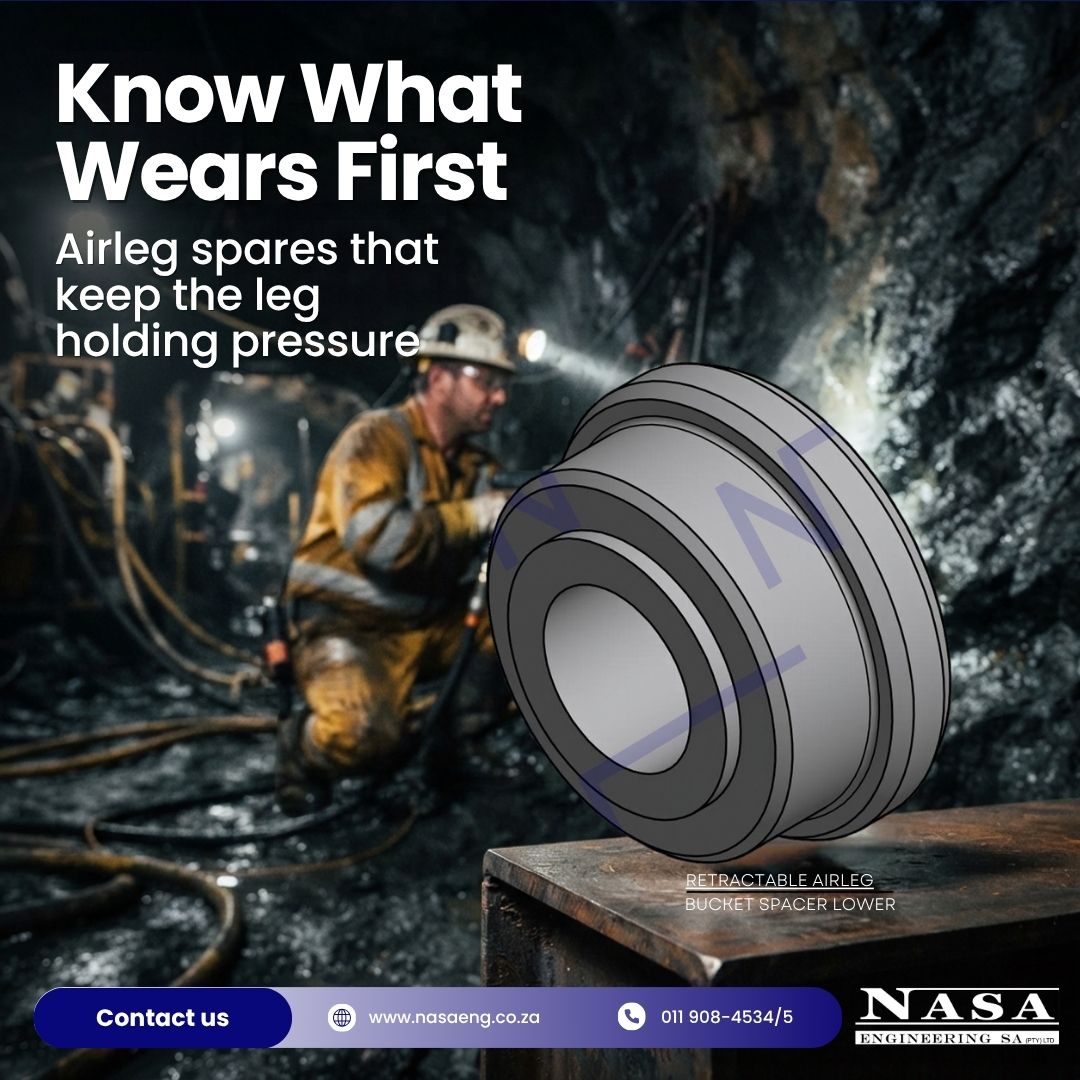
The Airleg Spares Most Subject to Wear
Every component of an airleg operates under demanding conditions. However, certain parts wear more rapidly than others. The components most frequently replaced by maintenance teams are outlined below.
Airleg Cylinder and Piston Rod
The airleg cylinder and piston rod bear the full thrust of drilling. A scored, bent or pitted rod damages the seals, allowing air to escape and reducing the thrust of the leg.
To identify the correct parts for your equipment, please refer to our complete list of airleg cylinders, as well as our complete list of airleg piston rods.
Bucket Seal and Spacers
The bucket is the seal that enables the leg to hold pressure, and it wears rapidly when exposed to grit or dry running. It is positioned between the upper bucket spacer and the lower bucket spacer, with the spacer completing the assembly. When replacing the bucket, the spacers should therefore be inspected at the same time.
Airleg Top Cap, Top Cap Bush and Bottom Cap
The top cap and top cap bush guide the piston rod and absorb side loads. A worn bush allows the rod to move off centre, which accelerates seal wear.
The airleg bottom cap seals the cylinder and absorbs impacts from the footwall. It should therefore be inspected regularly for cracks and thread damage.
Spindle, Spindle Nut and Thrust Washer
The spindle, spindle nut and thrust washer secure the assembly under load. Should the nut loosen or the washer wear, the leg develops play. As a result, collaring becomes more difficult and additional strain is placed on the remaining components.
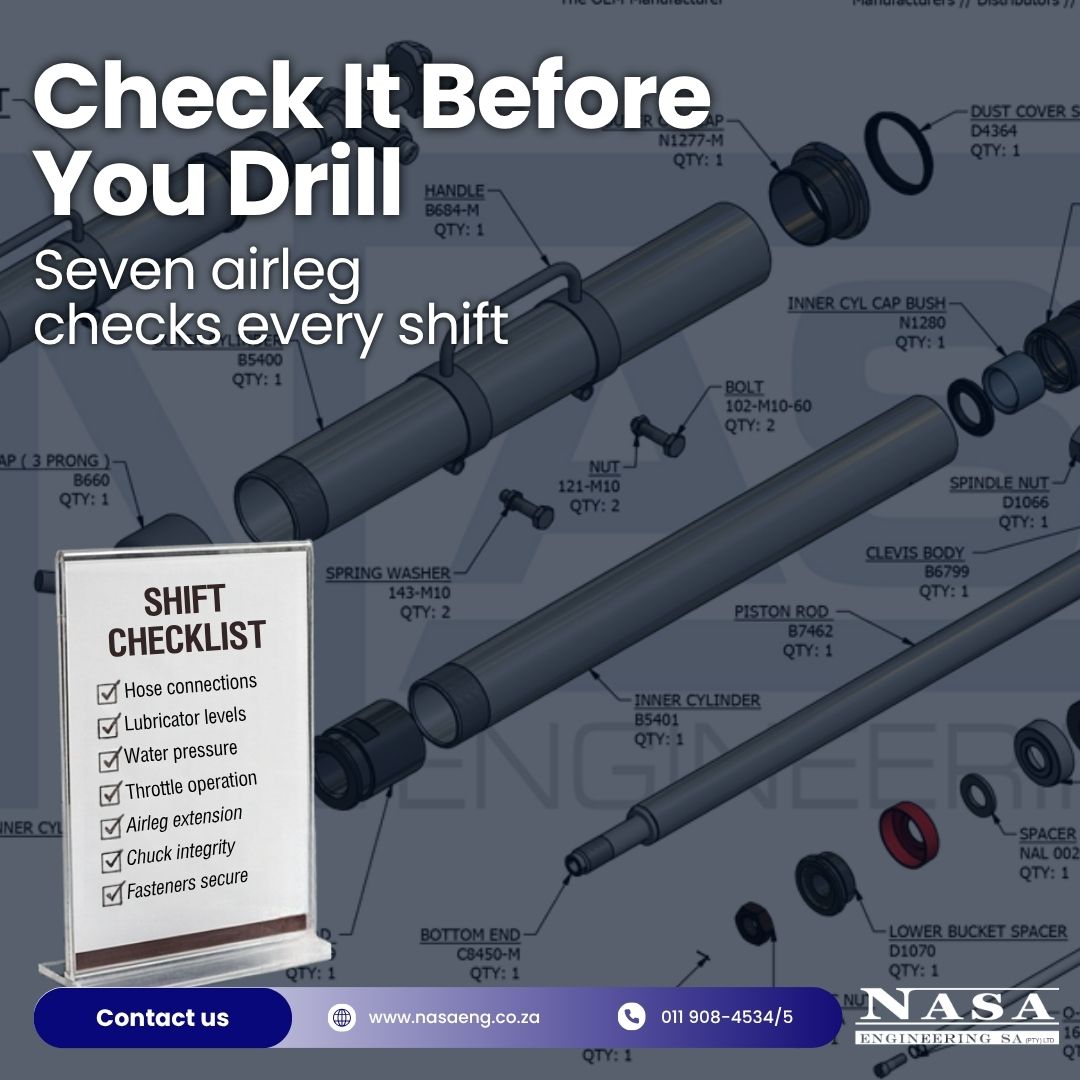
Airleg Spares Checklist: Inspections for Every Shift
Before drilling:
Blow out the air line.
Confirm that the lubricator contains oil.
Inspect the piston rod for scoring, dents or bends.
Extend and retract the leg to confirm that it moves smoothly and holds position without creeping.
Listen for air leaks at the top cap, bottom cap and twist grip.
Confirm that the spindle nut is secure.
Ensure that the twist grip controls the feed correctly.
At the end of the shift:
Remove mud from the rod and caps.
Cover the air inlet to prevent the ingress of dirt.
Report any faults rather than leaving them for the following crew.
Clean, lubricated air is as important as sound components. Industry standards recommend draining airline filters weekly and topping up mist lubricators approximately every four weeks. We also caution that excessive oil can cause damage. As underground conditions are considerably harsher than those of a factory floor, these checks should form part of the daily maintenance routine.
Airleg Repair or New Airleg Spares?
If the cylinder is straight and the bore is clean, an airleg repair is usually the best value. In most cases, that means fitting a new bucket, spacers and top cap bush.
On the other hand, a dented cylinder or bent piston rod needs replacing. New seals in damaged metal will fail early. As a result, the leg simply comes back to the workshop sooner.
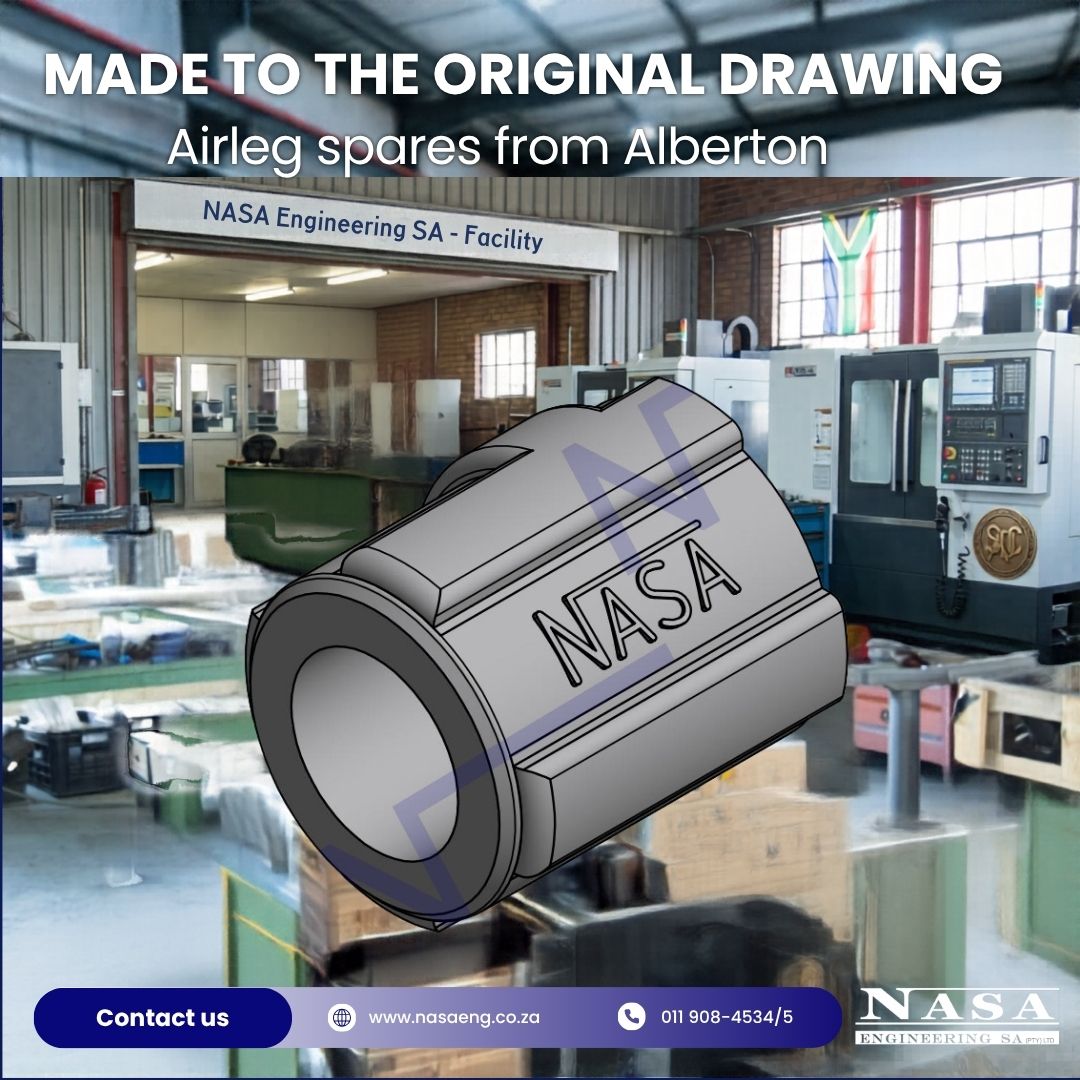
Order Your Airleg Spares Today
Is a worn airleg affecting your crew’s productivity? Please send us your part numbers or wallchart reference, and our team will confirm the correct parts and arrange prompt delivery.
Contact us on 011 908 4534 or email sales@nasaeng.co.za. Alternatively, you are welcome to visit our factory at 7 Beryllium Street, Alrode, Alberton, to consult with our technical team in person.
Looking for an Engineering solution or products from our range?